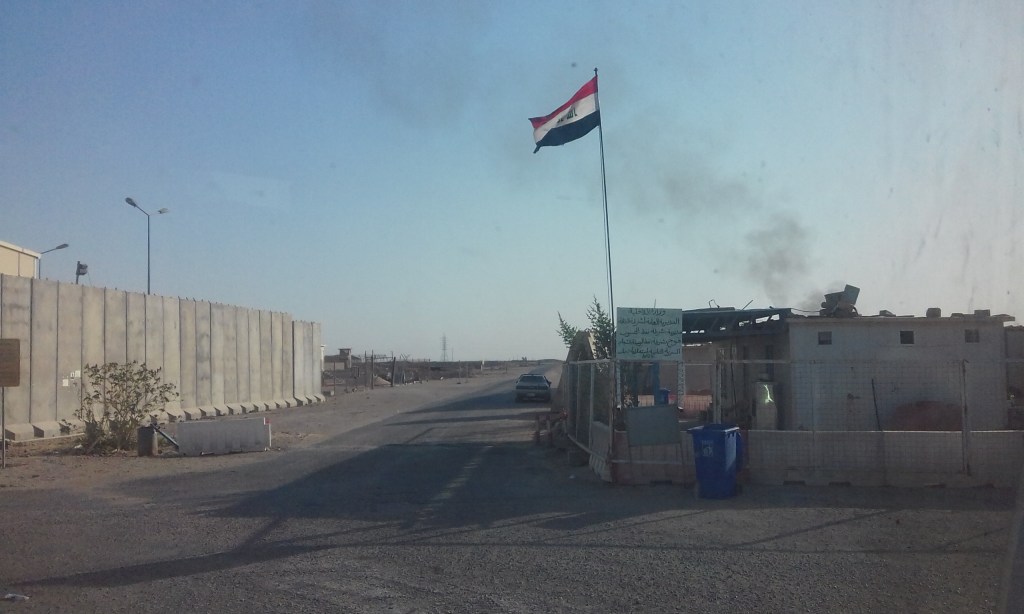
Historians write that civilisation began in four key parts of the world, the common theme being a fertile valley, some five thousand years ago. Short in geological time, but an eternity of reality television. The Nile in Egypt, the Indus in India, the Yellow River in China, and within the alluvial basin between the Tigris and the Euphrates in Mesopotamia.
Within these communities, cities were built, writing developed, and large agricultural surpluses were harvested. Mastering irrigation enabled an agrarian community to prosper. Civilisations flourished and fell, generated wealth then disappeared into poverty. Mesopotamia, now Iraq, is one such civilisation.
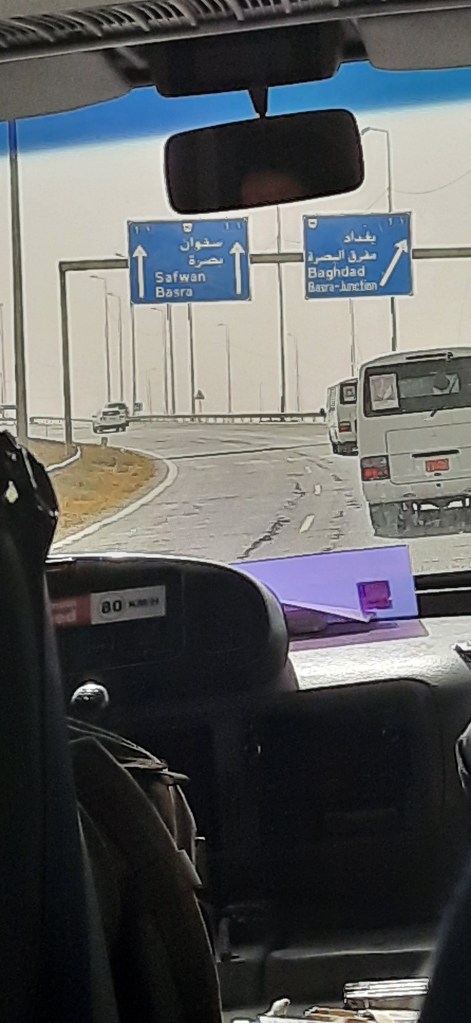
Working on the oil-fields of Basrah, between 2018 and 2020, will forever be a cherished life experience. It provided an appreciation for the challenges of living and working in this fascinating country. With opportunities to travel to parts of the Middle East, such as Jordan, United Arab Emirates, and Oman, the inspiration to piece together my understanding of this fascinating region began. Through conversations, reading of Iraq’s history, and observing the historical events taking place, this post attempts to capture my interpretation of the country.
Split in to three sections, this story first outlines my understanding of its history. From the earliest civilisation, to the setting for a fascinating split in Islam; its dominance in the region, to its present struggle for water and electricity, and its awkward geopolitical position. So get comfortable.
The Middle East is fascinating to explore and experience the history of human development. Its strategic location meant trade moved constantly; swapping people, beliefs, views and opinions between East and West. The 1872 interpretation of tablets found in Nineveh, presented a Mesopotamian interpretation of the Hindu story of Manu, a story the Christians call Noah’s Ark. The story also features in the Quran, with Nuh ibn Lumik ibn Mutushalkh playing the lead role. All beliefs referring to a common event that involved much water.
A fascinating rule of law developed in Mesopotamia in the earliest days, where the ruler was also the chief priest, and the temples a key part of the political system. Managing an agrarian system was easier with a religious structure, as families and alliances became larger than the earlier, smaller tribal groups. Religion provided a structure to unify large groups of people. With an aligned goal, and working together, this civilisation flourished.
The earliest recorded global civilisation, Sumer, was an alliance between 12 city-states in southern Mesopotamia. Starting from nearby Ar Ratawi in the south, up past Ur, and Uruk in the middle, with Babylon the northern town. Sargon, an influential leader around 2300 BC, chose Agade (Akkad) as his base, unifying Akkadian and Sumerian speakers into the Akkadian Empire. Humbling to think we were working a few hundred kilometres from where the first writings were written.
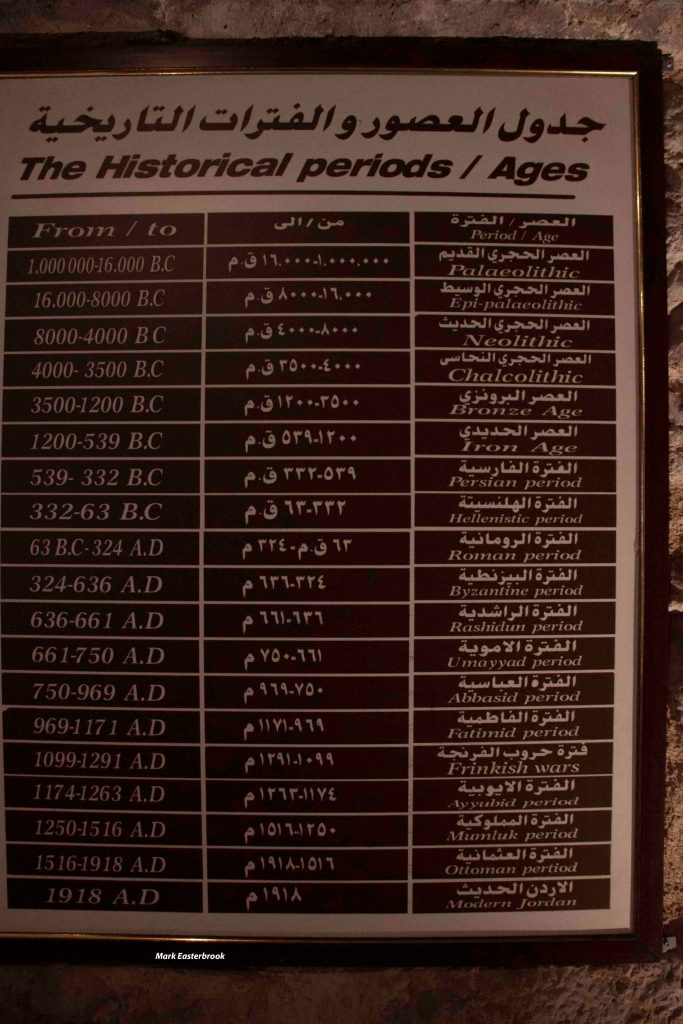
The lands of Iraq passed between the various Babylonian and Syrian influencers, before the Abbasid caliphate, with Baghdad as is capital, came to rule in the 8th century, wresting power from the Damascus based Umayyad caliphate.
Some two centuries earlier Islam had undergone a fundamental shift, branching in to two groups. Both groups view Muhammad as the spiritual leader, however the relationship of his messenger on earth was different. The Sunni sect believing the rightful successor was Abu Bakr, Muhammad’s father in law. The Shia sect saw their leader as Ali, Muhammad’s son-in-law, and father of his grandchildren. What started as a political decision in 632 AD, morphed in to the two major denominations of Islam.
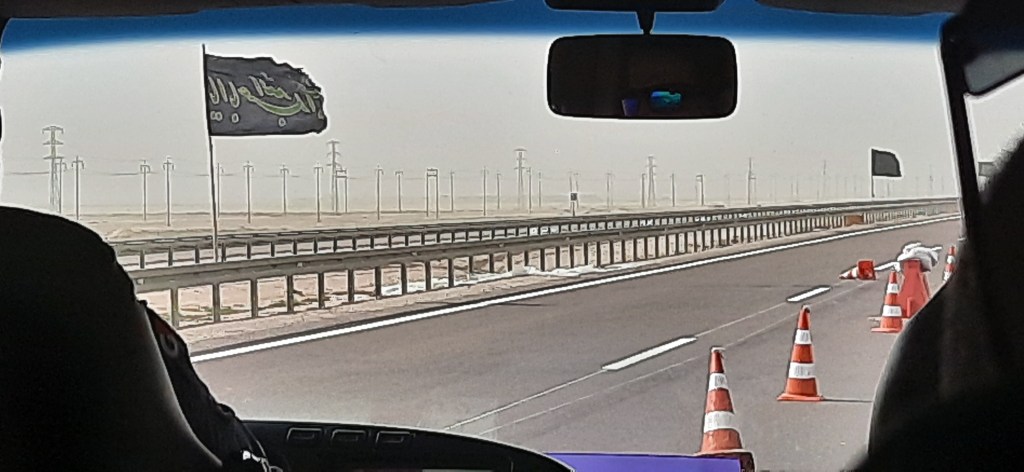
The event to cement the split was the murder of Husayn, Muhammad’s grandson, in Karbala (680 AD), by Yazid, the Umayyad ruler. Considered to be the event that triggered the fall of the Umayyad caliphate, and the Sunni-Shia split, it is celebrated annually in southern Iraq, with a pilgrimage from Najaf to Karbala. Part of the Arba’een festival, following Ashura, this religious ceremony commemorates the martyrdom of the Prophet Mohammad’s grandson.
In establishing the rule of Abbasid law in 754 AD, Al-Mansur, the second Abbasid caliph, moved away from the open Arab style of the Umayyads, towards the monarchical court of the Persians. Baghdad’s Abbasid caliphate pushed the Damascus based Umayyad caliphate to the Spanish and North African coastline. Setting up in Cordoba, this group became known as the Moors, gifting the fascinating Arabic architecture to southern Spain. Baghdad went on to become the Centre of Learning, supporting Islam’s Golden Age, between the 8th and 12th century under Abbasid rule.
The Abbasid caliphate disintegrated by 1258 AD, with the sacking of Baghdad by the Mongols under Hulagu Khan. Destroying the great irrigation systems built by the Abbasids, the region returned to the desert. The inspiration for the Mongol invasion is thought to be a need to reduce Asia to a nomadic herding economy. Irrigation systems were considered liabilities rather than assets, wealthy agrarian societies too risky as neighbors.
By 1508, the cities of Najaf, Karbala, and Baghdad had been absorbed in to the Safavid Empire. As leader of an Iranian dynasty with Kurdish decent, Shah Ismail was a supporter of the Twelver branch of Shia Islam. He recognised Iraqi religious sites as significant pilgrimage routes within the fledgling Persian state. Shah Ismail offered the people of southern Iraq a belief structure steeped in mysticism and otherworldliness, where people are judged on spirituality not possessions. Termed Sufism, this belief allowed the common people to escape the misery and fear of what had been a troubled few centuries.
The Ottoman Turks preferred a belief structure embodied in order and authority. Fearing Persian Shiism on his southern borders, sultan Salim the Grim, was victorious over the Persians at the 1514 battle of Chaldiran (now in Azerbaijan). Effectively stopping the Persian advancement West, the Ottomans claimed territory in Northern and Western Iraq. Maintaining supply lines to the new territories was challenging, so both dynasties dug in for many centuries of unwinnable frontier wars, in which Iraq was the battleground and the booty. The Turkish-Iranian hostilities in Iraq affected the urban population as they prevented economic recovery, thereby cementing the division between Sunnis and Shiis.
Ottoman rule in Iraq supported the return to an agrarian economy, believing that farmers were easier to control than nomadic bedouin. The prospect of food all year round inspired nomadic peoples to become full-time farmers. Government and city merchants aligned with Sunni beliefs, the farmers aligned with the Shia sect.
Travelers moved through Iraq during Ottoman control, finding it too poor to be of interest. Until the British found its use for the region. The Euphrates River became an easier link between the countries of their growing Empire. The ‘British Dromedary Post’ linked England with India in weeks. Rather than the months it took for a ship to round the Horn of Africa. It reduced journey times, and reliance on fresh fruit supplied by Dutch controlled Cape Town. British consulates were setup in Basra in 1764, and Baghdad in 1798. The need to speed up communication meant the first British steamboats were ploughing the Tigris and Euphrates by 1834.
During a fascinating era of European colonization, the French were moving across Syria and the Germans were building railways between Istanbul and Basra. The Russians and British were playing their ‘Great Game‘ in Afghanistan. Concerned that European advancements would hamper British interests in India, Kuwait became a British Protectorate in 1899, and has been key to British policy in the Gulf ever since.
As the British Royal Navy converted from coal to oil, the discovery of oil in Iran in 1907 was important. As any geologist would, they followed the reservoir in to Iraq. At the time, oil was growing in importance, and the British declared it a ‘vital national interest’. Oil, irrigation, and the quick England to India trade route made Iraq an important strategic country to Britain. All this was ongoing whilst the Ottoman Empire controlled the area. But that all changed with World War 1. Enter my two favorite characters of contemporary history, Lawrence of Arabia and Prince Faisal.
World War 1 presented Arab leaders who resented Ottoman rule with options for change. Gran Sharif of Mecca, Husayn ibn Ali, sought to unify Arab lands against the Ottomans, and initiated the Arab Revolt in 1916. His sons Ali and Faisal spent most of 1916 to 1918 engaging with the various Bedouin tribes of present day Jordan, Syria, Iraq and Saudi Arabia, building a fighting force to overthrow the Ottomans. The Arab Revolt was aligned with British aspirations through the region. The archaeologist, T.E. Lawrence, at that time working for the British Museum in Ottoman Syria, volunteered for the British Army. Stationed in Egypt, he was soon moved to Arabia as a liaison between Arab and British forces. His knowledge of Arabic and awareness of local cultures, ensured his integration into the leadership circle of the Gran Sharif and Prince Faisal, as key advisor. British and Arab goals were aligned through the early days of WW1, but the secret 1916 Sykes-Picot agreement, publicized in 1917, contradicted public commitments made to supporting an Arab homeland.
Expecting their own unified Arab state, what followed was a period of mandates for various European nations over regions of the middle east, justified by the League of Nations. The monarchy of King Faisal was created in Syria in 1918, but disbanded in 1921 due to French pressure. Faisal became king of Iraq in 1921, as part of the Hashemite Monarchy, under British protection, and led the country to independence in 1932. The Hashemite Monarchy still exists in Jordan, but in Iraq it was overthrown in 1958. With the demise of King Faisal II, Iraq became a republic, and the rest is, as they say, history.
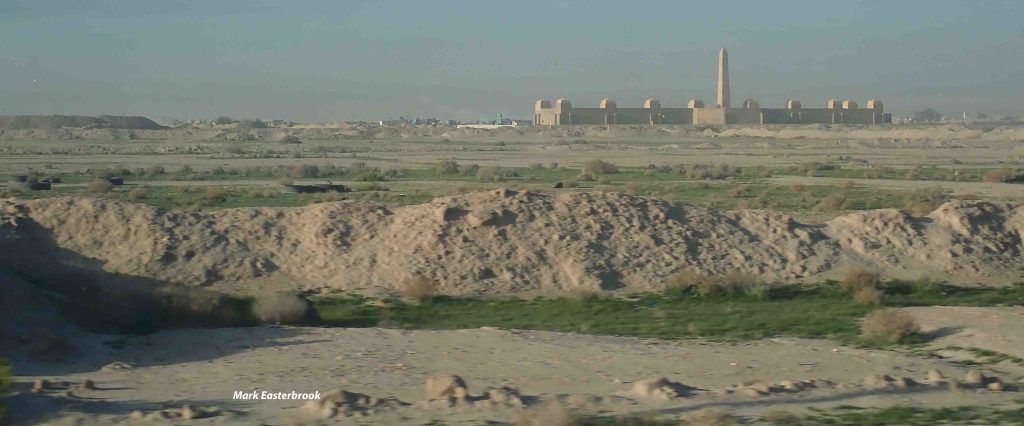
Remnants of the Ottoman Empire are still asserting their influence over Iraq. Irrigation has always been a key factor in ensuring the strength of Mesopotamian civilisations across the centuries. Although modern Iraq hasn’t helped itself on the water front, by draining the marshes, significant reductions in flow down the Tigris and Euphrates has been catastrophic for the people eking out a life in the lower reaches of the river. Dams being built in Turkey, have reduced water flow to Iraq by 80% according to some sources. International law envisions collective, mutually agreed, conditions for shared water resources. Not being applied in this region alas. In a parallel to Australia’s Murray River, running through three states before pouring in to the ocean near Adelaide, it is left to the downstream communities to manage the damaging effects of reduced flows, salinity and ecological impact. Upstream industry in other political jurisdictions taking more than their fair share of water has led to a number of protests in Basrah in recent years.
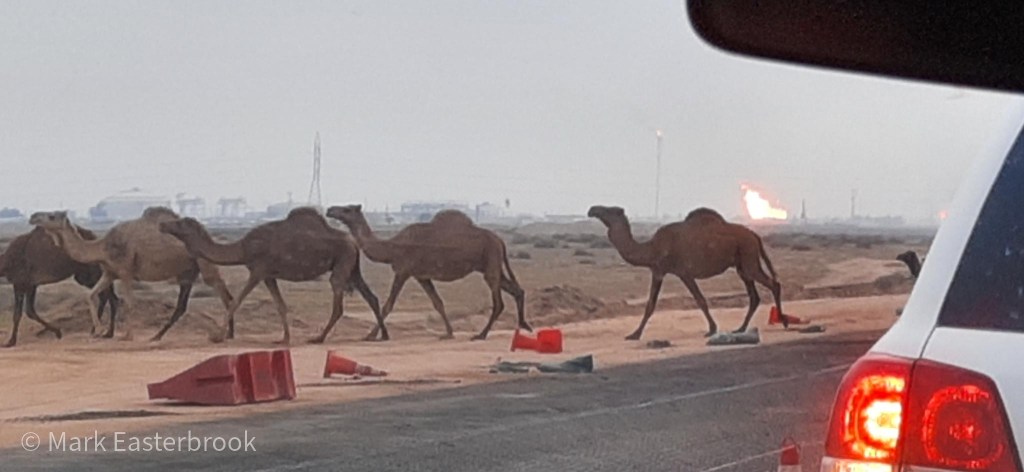
As a keen advocate for capturing associated gas and using it for energy production, it is disheartening to see so much going to waste. For a country with such a vast reserve of oil and gas, it really should have a wealth to rival Dubai or Kuwait, however power failures and reduced capacity are a frequent issue.
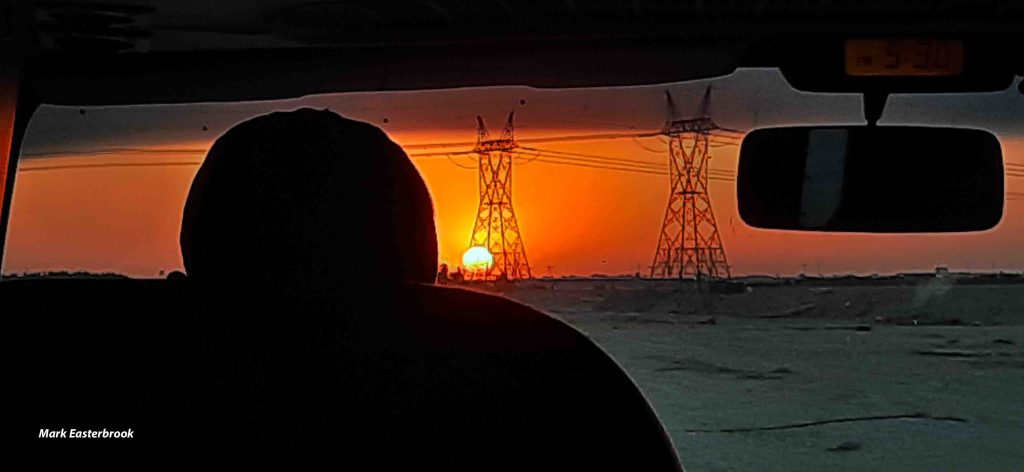
In mid-2018 there were a number of protests against a lack of clean water and electricity. The protests brought the country to a standstill at the time, but did result in commitments to improve the situation, with a sizable financial grant. Protests against the poor electricity supply were ratcheting up by mid-2020. It is encouraging to see new power generation being installed, the technology supplied by numerous countries involved in rebuilding Iraq. It needs to be connected and brought in to operation, quicker.
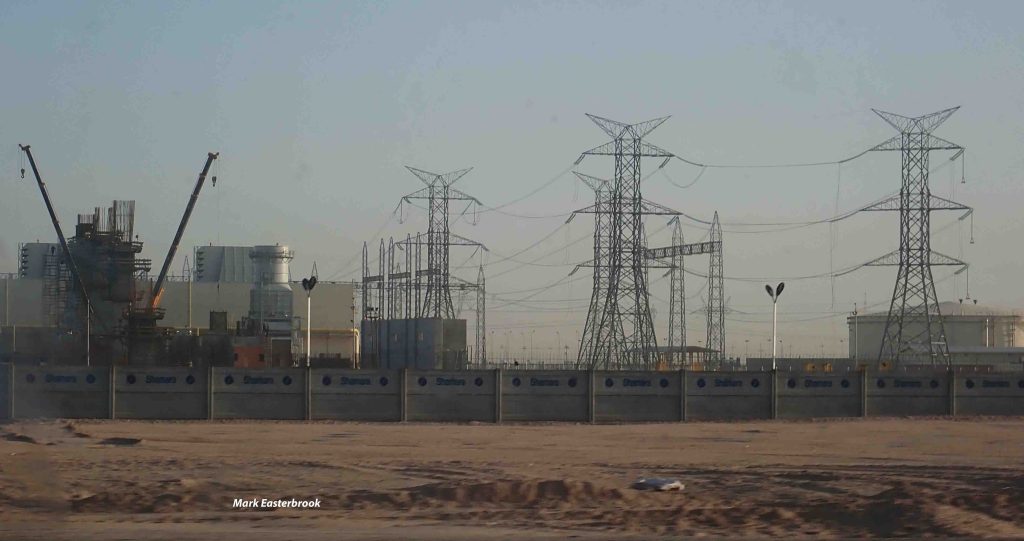
Managing the impact of Covid-19 and the collapse in the oil price is going to be challenging for Iraq over the coming years. We have the technology to dry the vast gas reserves under the country, convert hydrocarbon to energy and distribute power, but it needs political will to make it happen. As I step away from daily involvement, my fingers are crossed that the people will enjoy the wealth of their resources, as they did in the Akkadian and Abbasid times, rather than retreat back to the post-Mongol dark ages.
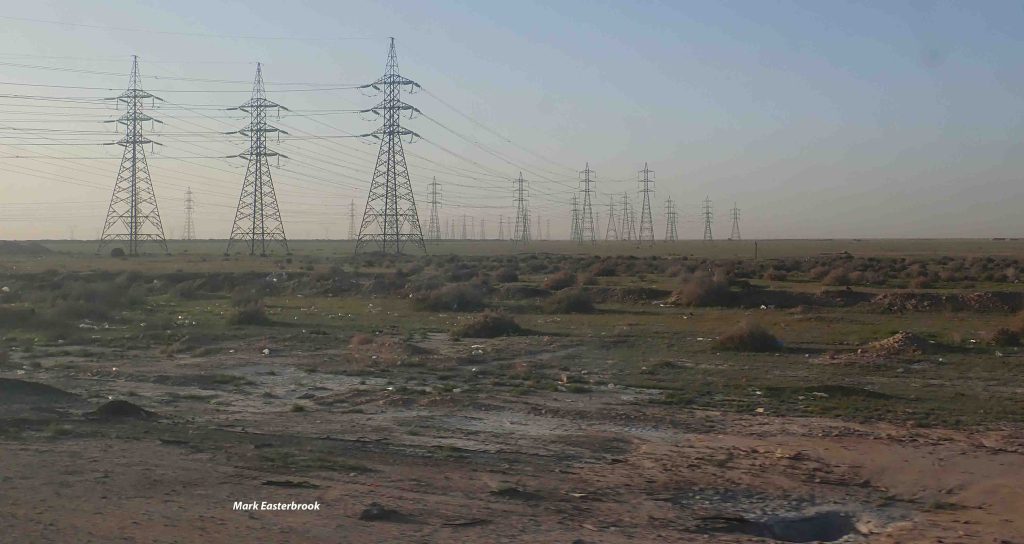
A melting pot of multiple denominations, Shia and Sunni, and nationalism of Arab and Kurds, with an abundance of oil. Pulled in many directions without unifying leadership, the turmoil in the country is understandable. The opportunity to experience the present challenges as a project engineer on the oilfields, albeit under secure guard, was a privilege.
Special thanks go to those local Iraqi’s working with me on the gas installations of the North Rumaila field. Both male and female, I always enjoyed your stories of what it was like living in Basrah and Iraq. And your showing me the many videos of trips taken to the historical sites of Ur, Urak, the Marshes. In the spirit of goal setting, let’s hope we can enjoy coffee over-looking a fast flowing Shatt al-Arab on the corniche’ in 2040, without the need for a PSD.
Key references for this piece are:
- Polk, William R.: Understanding Iraq, 2005
- (An excellent, easy to read book on Iraq’s history, engaging at every page turn)
- The Times; Compact History of the World, 1995
- (I’ve had this book for 20 years. After every country visited, something new jumps from the relevant page, a choose your own history adventure)
- Dodge, Toby; Inventing Iraq, 2003
- (A bit of chew to get through, but worth a read whilst on the PSD)
- Lawrence, T.E.; Seven Pillars of Wisdom, 1926
- (Almost 100 pages describing riding camels, and slow. But the remaining 600 pages of his adventures were so engaging. I even traveled to, and had my picture taken, at the Seven Pillars in Wadi Rum, Jordan)
- Wikipedia, Encyclopedia Britannica and other internet resources referenced with a link
 Ecosystem Hotspots